
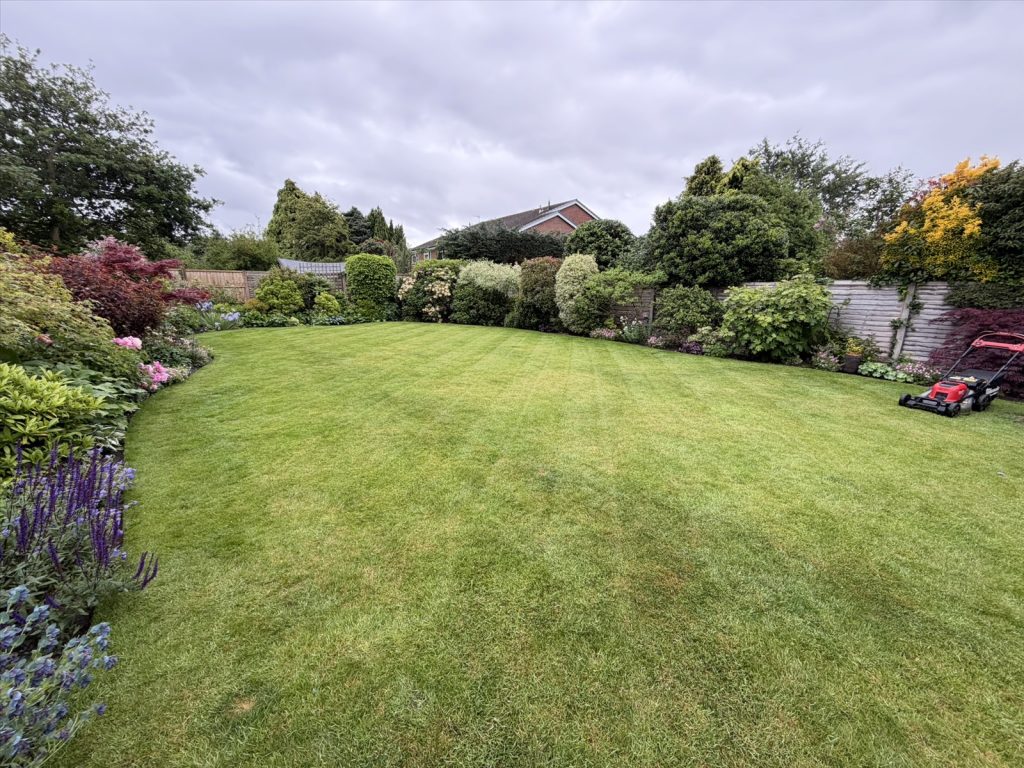
For a conventional UK garden lawn, mowing roughly once a week or fortnight during the main growing season is a useful starting point. Change the interval when growth changes: a warm, wet spell can bring rapid growth, while drought or cold may mean leaving the mower in the shed.
Choose the finish you want too. A short, neat lawn needs a different routine from longer grass left to flower for wildlife.
Let growth decide the next cut
Look at the grass rather than the calendar. If the lawn has grown noticeably since the last cut and the surface is dry and firm, it may be ready. If little has changed, there is no benefit in mowing simply because it is the usual day.
The RHS suggests avoiding removal of more than a third of the grass height at once. For example, reducing 6cm grass to around 4cm removes one third. If it has grown much longer than usual, raise the mower setting for the first pass and bring it down gradually over subsequent cuts, allowing time between them.
How often in spring and autumn?
Once grass begins growing, a conventional lawn may need a cut every week or two. Start the year with the mower set high, particularly if the grass has grown unevenly over winter. Later in autumn, extend the interval as growth slows and keep the cut higher as conditions become wetter.
These are guides, not dates to enforce. Avoid mowing wet or frosty grass, and stay off soft ground when mower wheels would leave ruts.
What about summer?
In a mild, damp summer the grass may grow quickly enough to need weekly attention. During prolonged dry weather it usually slows; reduce mowing or stop while growth has paused, and raise the cutting height. Brown grass after drought may recover when rain returns, so give it time before deciding that it needs replacing.
Shaded areas may grow more slowly than the sunny part of the lawn. If you can adjust the mower height easily, leave shaded grass longer rather than treating both areas identically.
Can you mow in winter?
Usually there is no need. In a mild spell, grass may still grow and an occasional high cut may be suitable if both grass and soil are dry and firm. Do not mow frozen grass or ground that is saturated or soft.
What if the lawn is newly sown?
Young seedlings need time to root before their first cut. The timing depends on establishment as well as height and ground conditions. Our guide to mowing new grass covers the first cut and aftercare.
Can I leave the grass longer for wildlife?
Yes. Leaving the whole lawn, or even one section, uncut allows existing wildflowers to bloom and provides habitat. You can keep a mown path or edge if you still want easy access. The RHS mowing guide explains options for shorter flower-rich lawns and longer grass.
A few checks before mowing
- Remove stones, toys and other objects from the lawn.
- Use a sharp, well-maintained blade and follow the mower manufacturer’s safety instructions.
- Raise the cutting height if the grass is long, the weather is dry or the lawn is uneven.
- Collect clumps of clippings so they do not cover the grass; if a lawn treatment was used, follow its label on handling clippings.
For a lawn that remains thin despite changes to mowing, check wear, shade and moisture too. Our thin and patchy lawn guide will help you narrow down the cause.