
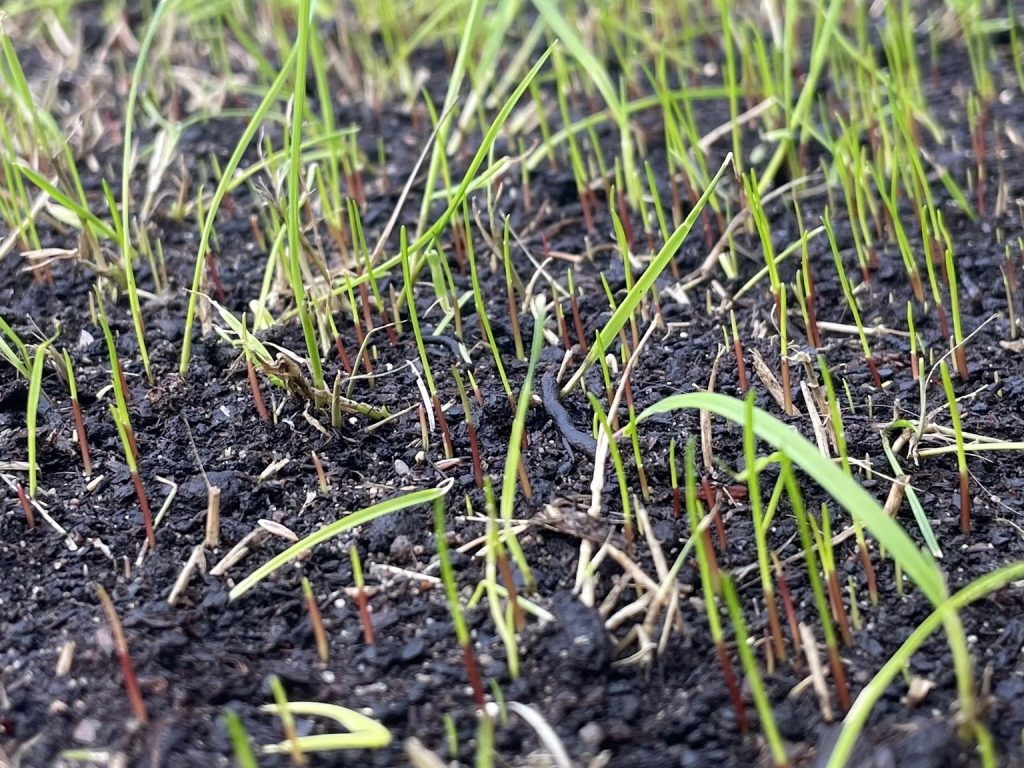
If your grass seed has not appeared, check the weather, moisture and seedbed before sowing again. Cold soil can delay emergence, and different grasses in a mix may appear at different times. A dry surface, heavy rain or seed sitting on debris can also make establishment uneven.
How long has it been?
Check the sowing date and the guidance supplied with your mix. The RHS gives around seven to ten days as a guide in favourable conditions, but this is not a deadline for every mixture or garden. A cold spell, shade or an uneven seedbed can slow progress. Our germination guide explains why the first shoots are not the same as an established lawn.
If some areas have appeared, keep looking after them while you assess the gaps. Do not rake vigorously over emerging seedlings or repeatedly walk on soft soil to check them.
Check the surface moisture
Look at both the sunny and shaded parts of the seedbed. A surface that dries between checks may need gentle watering when rain is insufficient; use a fine spray so seed is not washed away. Soil that is already saturated or has standing water needs time to drain, not another watering. Check any local water restrictions.
Conditions can change quickly near walls, under trees and on sandy soil. Our guide to watering new grass seed covers how to judge moisture without relying on a fixed daily schedule.
Look for uneven seed contact
Seed needs contact with a prepared surface. Thick debris, loose clumps or a deep covering of soil can leave some seed poorly placed. Heavy rain may also move seed into low spots or expose the surface. If seedlings are already emerging, avoid disturbing them; note the bare places for a targeted repair once you can tell which areas need it.
When repairing a bare patch, prepare it according to the seed supplier’s instructions, lightly cover the seed as directed and water gently. Use the correct rate for a patch or overseeding rather than piling on extra seed.
Could birds or traffic be disturbing it?
Look for displaced seed or footprints, but avoid assuming birds caused every bare area. The RHS suggests horticultural fleece as one way to protect a newly sown surface; secure it as directed and check it regularly. Keep pets and people off young grass while it establishes.
Check the seed and the conditions
Find the packet and review its storage and sowing instructions. Seed that has been stored poorly or for a long time may be less reliable, but a patchy result alone does not prove the seed is faulty. Shaded and exposed corners may also respond differently to the same sowing.
If you used a weedkiller or a combined lawn product before sowing, check that specific product’s label for the permitted interval before reseeding. Do not apply an additional treatment to compensate without checking whether it is suitable for young grass.
When should you sow the gaps again?
Wait until you have allowed a reasonable time for the mix and weather, and can see which areas remain bare. Correct the cause you can identify first: for example, improve seed-to-soil contact or adjust watering. If conditions have turned cold, very dry or waterlogged, waiting for a better sowing window may be more effective than scattering more seed immediately.
Choose a suitable mix, follow its label rate and care for the repaired patches. Our guide to when to sow grass seed helps with timing, and when to mow new grass explains the first cut once seedlings are established.
For help discussing a lawn in Formby or the L37 area, visit our local lawn care page or email info@spritelylawns.co.uk.