
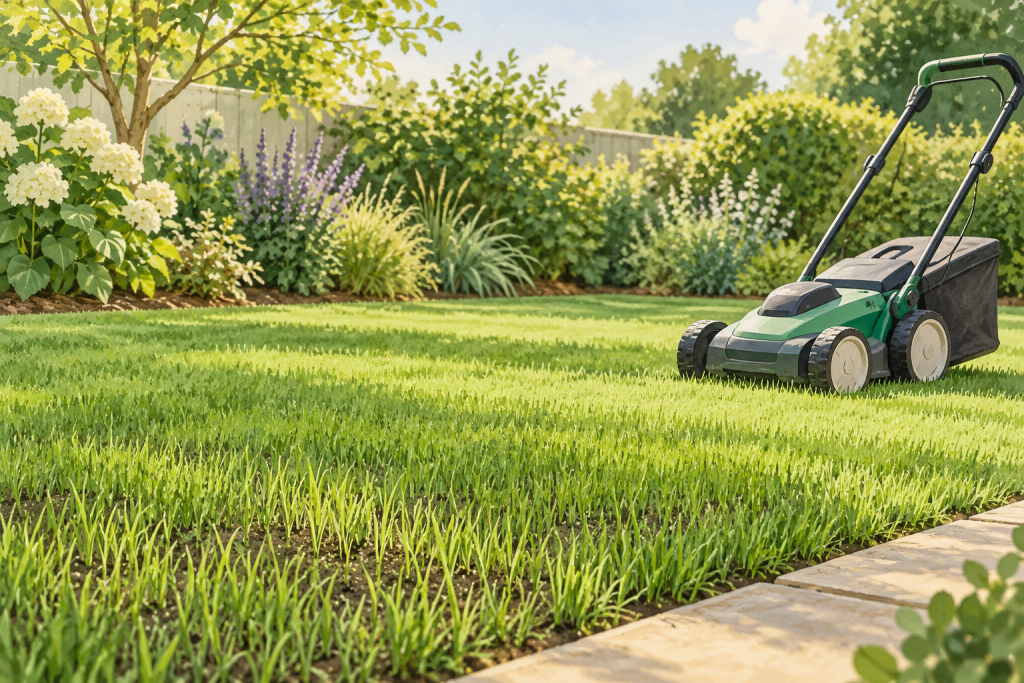
Wait until new grass is at least 5cm tall and the ground is firm enough to walk on without leaving marks. The RHS recommends a high mower setting for the first cut. Seed mixtures and conditions vary, so check the packet for any specific advice.
There is no fixed number of days that suits every lawn. A cool spell or a shaded patch can leave parts of the lawn behind. If the surface is soft or an area is still sparse, give it more time.
Getting ready for the first cut
Choose a dry day when the grass is dry and the ground is firm. Wheels can sink into soft soil and leave ruts. Clear stones and other objects from the mowing area, and check that the mower blade is sharp, following the manufacturer’s safety instructions. A blunt blade can tear grass rather than cut it cleanly.
Set the mower high and remove no more than a third of the grass height. For example, if the grass is 6cm tall, leave at least 4cm after the cut. If the mower pulls seedlings out or its wheels mark the ground, stop and give the lawn more time to establish.
Mowing after overseeding
On an overseeded lawn, the existing grass may grow faster than the seedlings. Lawn UK recommends mowing when the existing grass reaches around 5–8cm, provided the seedlings are firmly anchored. Follow the seed supplier’s instructions for your particular mix and wait if the ground is too soft to cross without damage.
Use a high setting and avoid repeated passes over vulnerable patches. If the older grass has grown long while you waited, bring it down gradually over several cuts rather than scalping it in one go.
After the first cut
Water gently when needed and keep heavy use off the young grass. As it strengthens, gradually adjust the cutting height to suit the lawn and how you use it. In hot, dry weather, leave the grass longer or pause mowing. Autumn-sown grass may need little further mowing until spring if growth slows.
The RHS guide to starting a lawn from seed has more advice on watering and looking after young grass.