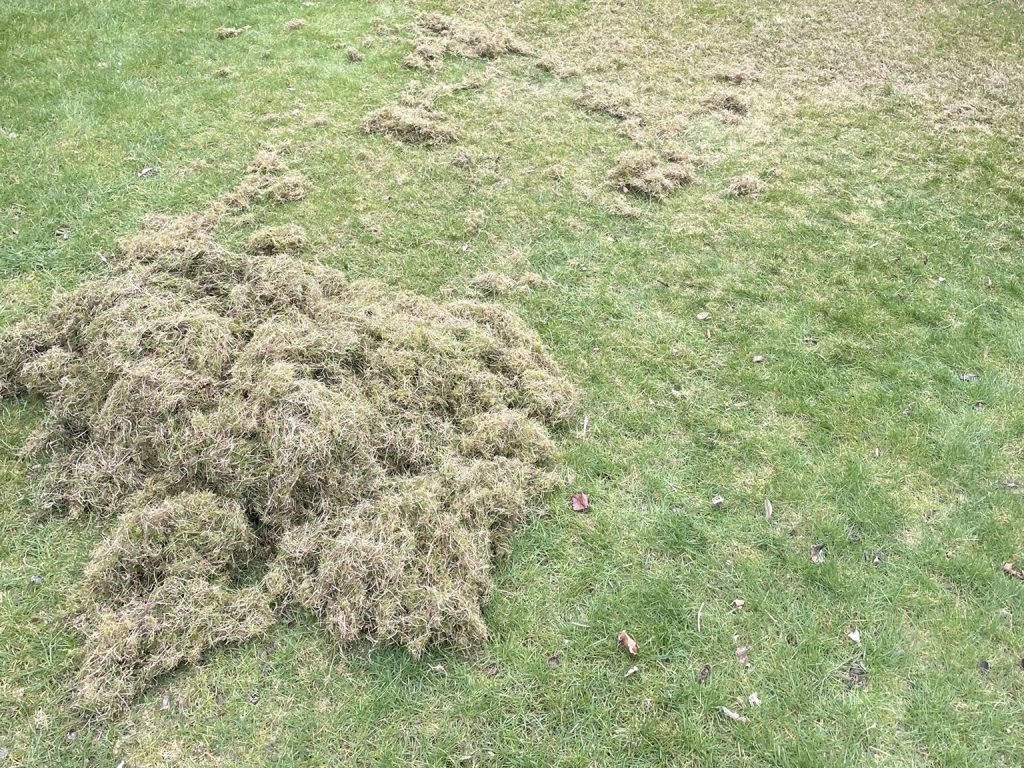
Scarifying removes a build-up of dead grass, moss and other material from the lawn surface. Use a spring-tined rake for a small area or a suitable powered scarifier for a larger lawn, and work when the grass is growing well enough to recover.
Not every lawn needs scarifying every year. Part the grass and look at the surface: if a dense layer makes the soil difficult to see, removing some material may be useful. A lawn that is already thin, very dry or saturated may need different attention first.
When to scarify
Early autumn is a common time for this work because conditions often allow grass to recover. The RHS autumn lawn-care guide recommends choosing the jobs your lawn needs rather than doing every task each year. Avoid working on frozen or waterlogged ground, and postpone if the lawn is stressed by drought.
If you plan to sow afterwards, allow time for the seed to establish in suitable conditions. Our guide to sowing times explains the trade-offs.
Rake the lawn
- Mow and clear the lawn first, leaving the grass at a manageable height without scalping it.
- Use a spring-tined rake to work through the surface, lifting loose material while trying to leave healthy grass rooted.
- Work across the area in another direction where needed, checking the amount removed as you go.
- Collect the material you have lifted. Suitable untreated plant material can be added to a compost heap.
For a powered machine, read its instructions, check the area for obstacles and start conservatively. Test a small area and adjust only if needed; do not keep making deep passes simply to fill more bags. Stop if the machine is pulling out substantial healthy grass.
What should the lawn look like afterwards?
It may look thinner and rougher because material has been removed. Where bare patches appear, assess their cause and repair them when conditions suit sowing. If useful grass remains across a wider area, overseeding may be appropriate. Keep newly sown areas moist and reduce traffic while seedlings establish.
Scarifying removes surface material; aeration is a separate job used to address compacted soil. Neither is a universal fix for persistent shade, wear or drainage problems. Our thin-lawn guide helps identify likely causes.
Do I have to remove moss?
No. Moss can provide green ground cover where grass struggles, especially in shade or damp conditions. The RHS explains the benefits of leaving moss as well as ways to manage it. If you choose to remove it, improving the conditions for grass can help reduce the chance of it returning.