
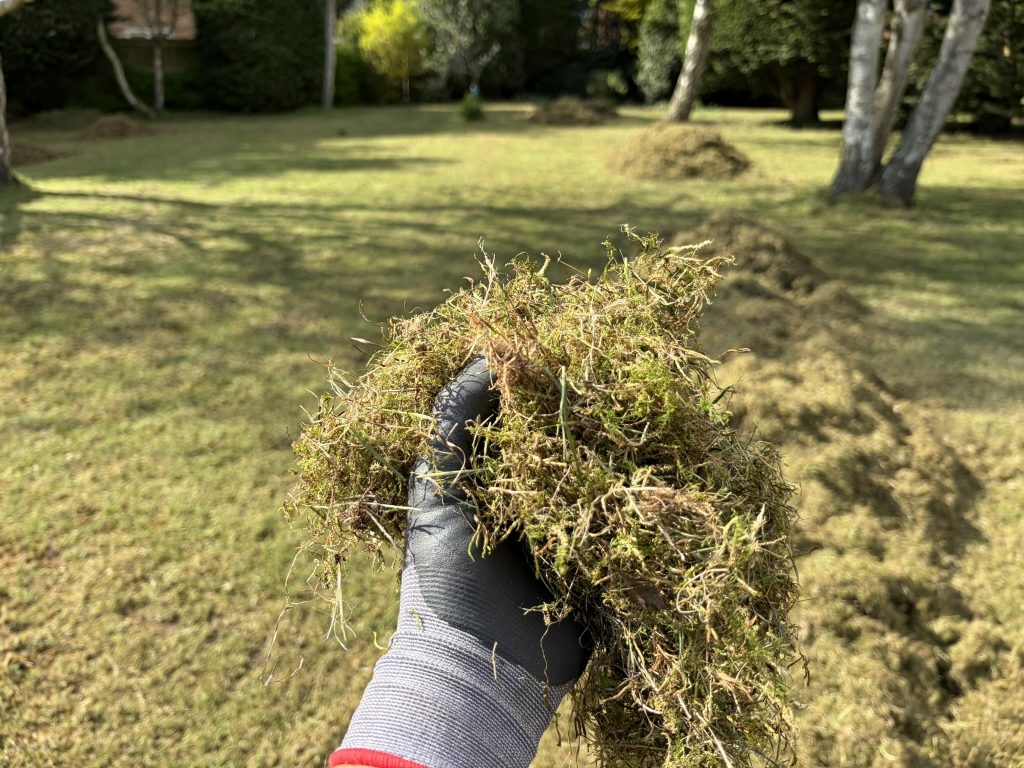
Moss often appears where grass is thin and conditions favour moss: shade, damp soil, compacted ground or repeated wear are common clues. It can make a soft green surface and provide habitat for small creatures, so you can leave it if you like the way it looks.
If you would prefer more grass, look at why that part of the lawn is struggling before removing the moss. Otherwise, the same conditions may encourage it to return.
Look at where the moss is growing
Under trees or beside a fence
Shade reduces the light available to grass. If it is practical and appropriate, selective pruning may let in more light, but established trees and shrubs have value too. A shade-tolerant grass mix can help in partial shade; even a suitable mix may struggle in deep shade or where roots compete for moisture. In those places, a mossy lawn or shade-loving ground cover may be easier to maintain.
On a damp or frequently puddled lawn
Notice how long water remains after rain and whether it collects in one place or across the garden. Heavy soil, compaction and run-off can all contribute. Keep off waterlogged ground to avoid making it more compacted, then investigate the cause once the soil is workable. Persistent flooding may need a drainage assessment rather than routine lawn treatment.
Along a well-used route
Regular foot traffic can wear away grass and compact soil, particularly when the ground is wet. Compare the worn strip with a quieter part of the lawn. Stepping stones or a path can protect a route that people use every day, leaving adjacent grass a better chance to recover.
Across a closely cut or patchy lawn
Cutting grass very short can weaken it and leave more space for moss. Raise the mower setting and adjust mowing frequency to growth. If patches are thin, investigate shade, wear and moisture before reseeding: our guide to thin and patchy lawns covers the main clues.
Should you remove the moss?
That is a choice about how you want the lawn to look and be used. Moss can be useful ground cover in damp shade and supports wildlife. If you prefer grass, remove a small area first and consider whether you can improve the conditions there. Removing a large amount may expose bare soil that needs repair.
How to reduce moss and help the grass recover
- Choose a suitable time. Early autumn is often useful while grass is growing and can recover. Avoid working on saturated or frozen soil, or during drought.
- Rake gently. A spring-tined lawn rake is suitable for a small patch. Remove unwanted loose moss without repeatedly tearing out healthy grass. A larger area may need a scarifier; follow its instructions and start conservatively.
- Address the cause. Reduce wear, adjust mowing height or improve light where practical. Aeration may help compacted soil, but it will not fix every drainage problem.
- Repair bare areas if needed. When the soil and weather are suitable, prepare exposed patches and sow an appropriate mix. Keep newly sown areas consistently moist while seedlings establish, without saturating the soil.
See our guides to when to sow grass seed and watering new grass seed for the next steps.
Will moss killer solve the problem?
Removing existing moss does not necessarily change the shade, wear or damp conditions that allowed it to grow. The RHS recommends non-chemical methods and advises against using household products such as bleach or vinegar, which can damage grass and other life. If considering a pesticide, use only a product authorised for that specific purpose and follow its current label.
Does moss mean the soil needs lime?
Not necessarily. Moss can grow in several conditions, so its presence alone does not tell you the soil pH. Test the soil before deciding whether pH needs adjustment, and follow appropriate advice for the result rather than applying lime as a routine moss treatment.
For advice about a lawn in Formby or the L37 area, visit our local lawn care page or email info@spritelylawns.co.uk.