
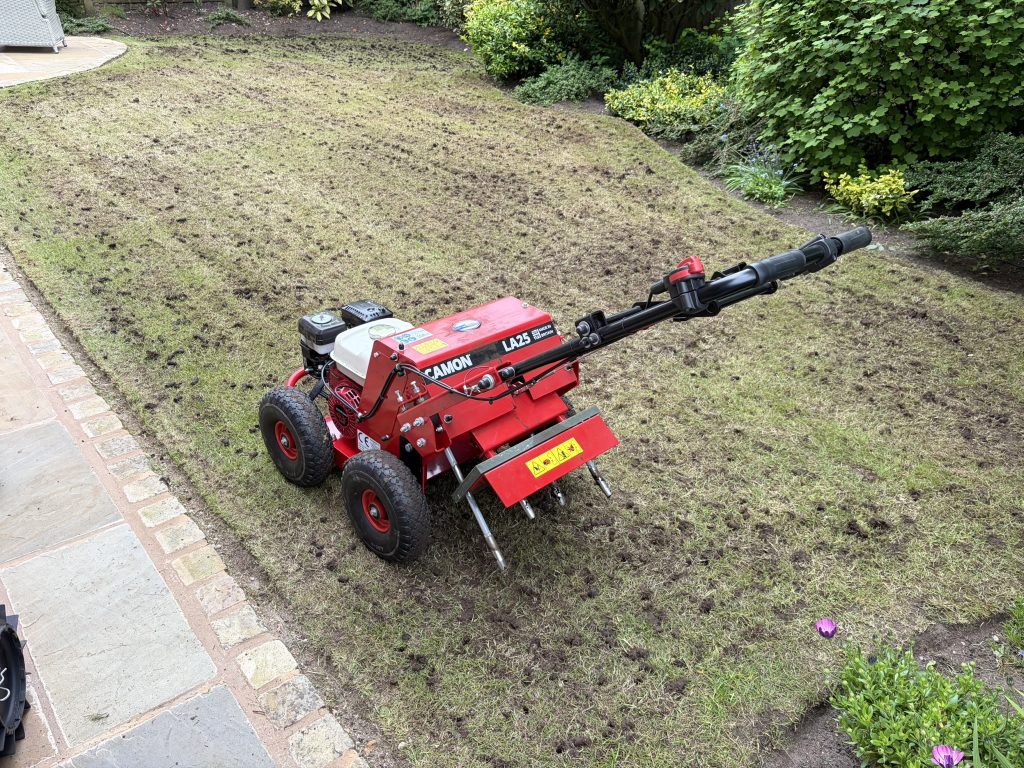
Lawn aeration makes holes in the soil so air and water can move more easily around grass roots. It can help where repeated foot traffic has compacted the ground, but a persistently flooded lawn may have a wider drainage problem that spiking alone cannot solve.
Does your lawn need aerating?
Look first at the areas that get the most use: a route to the shed, a place where children play, or the spot beneath a swing. Grass may be thin and the soil difficult to push a fork into. Puddling after rain can also point to compaction, although heavy soil, run-off or a drainage fault may contribute too.
Compare a worn area with a quieter part of the lawn. If the soil is firm throughout because it is very dry, wait for suitable moisture before drawing conclusions. You may only need to treat the worn sections.
When should you aerate?
Early autumn is a useful time because the soil is often moist and the grass still has time to recover. Spring can also be suitable when grass is growing and the soil is workable. Choose conditions that let the tool enter the ground without making a mess: avoid frozen or saturated soil and very dry, hard ground.
If water is standing on the lawn, wait until it has drained before working on the surface. Staying off soft, waterlogged areas helps avoid adding more compaction.
Garden fork or hollow-tine aerator?
A garden fork is a practical choice for a small, lightly compacted area. It makes holes but does not remove soil. A hollow-tine tool removes small cores and can be useful on heavier or more compacted ground. Powered equipment can make a large area more manageable; follow its instructions and make sure you can control it safely.
Check for shallow irrigation pipes, cables and other buried services before using any tool. If you cannot establish where they are, avoid the area until it is safe to work.
How to aerate a small lawn with a fork
- Choose a day when the soil is moist enough to work but firm enough to walk on without leaving muddy footprints.
- Push the fork into the compacted section, using your foot and keeping a balanced stance. Work to a comfortable depth without forcing the tool.
- Rock the fork gently to open the holes, then lift it out and move on. The RHS suggests spacing each set of holes roughly 10–15cm apart.
- Continue across the affected area. Remove any loose debris and allow the grass to recover under normal care.
For hollow tines, follow the tool’s directions and clear the extracted cores from the surface. A suitable topdressing can be brushed into the holes, but its composition depends on the soil and the purpose of the work. Avoid burying the grass under a thick layer.
How often should you do it?
Not every lawn needs annual aeration. The RHS suggests that aerating every two to three years is adequate for most lawns, with hollow-tining less often. Treat this as a guide: a frequently used route may compact sooner, while an open, well-draining lawn may need little intervention.
What if the lawn still puddles?
Consider where the water comes from and how long it remains. A downpipe discharging onto the lawn, a low spot, heavy soil or a damaged drain can each need a different response. If flooding is widespread or persistent, seek an assessment before investing in major drainage work. Any drainage system needs a suitable place for the water to go.
Is aeration the same as scarifying?
No. Aeration addresses the soil beneath the grass; scarifying removes accumulated material from the surface. Neither job is automatically necessary every year. If the lawn is thin as well as compacted, our guide to thin and patchy lawns can help you investigate, while the renovation guide covers wider repair decisions.
For help discussing a lawn in Formby or the L37 area, visit our local lawn care page or email info@spritelylawns.co.uk.