
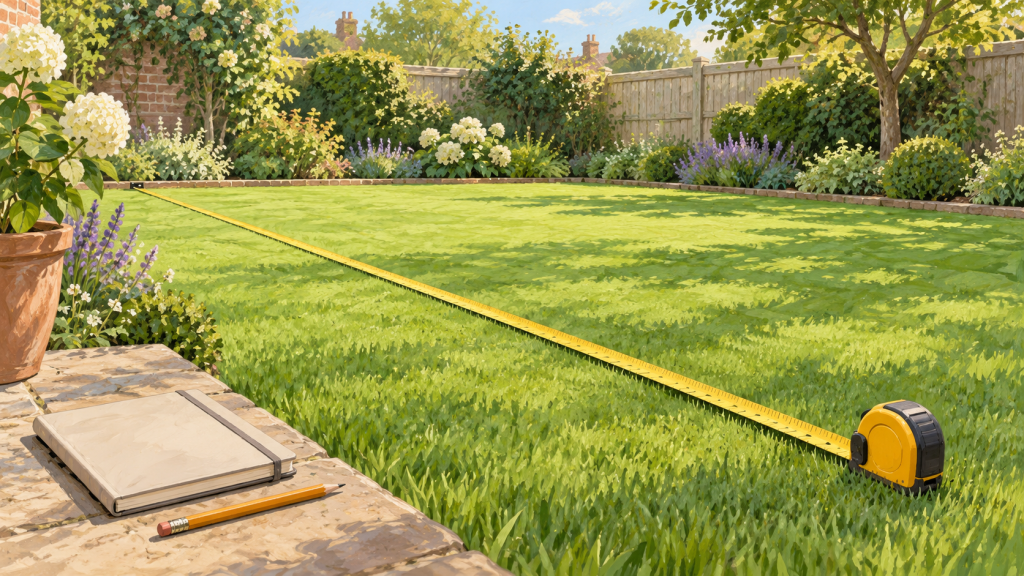
Measure the area you intend to treat, calculate the quantity from the fertiliser label and apply it evenly. A calibrated spreader can make coverage more consistent, especially on a larger lawn. Read the full product instructions first: the rate, weather conditions, watering and safety directions can differ between feeds.
Measure and weigh the feed
Measure the grass in square metres, leaving out paths and borders. Multiply the area by the label’s rate in grams per square metre; divide by 1,000 to convert grams to kilograms.
For example, at a hypothetical rate of 30 g/m², a 40 m² lawn needs 1,200 g, or 1.2 kg. This is an arithmetic example rather than a rate for a particular product. Weigh the quantity for your own lawn before starting.
Set up the spreader
Use equipment suitable for the product and follow its calibration instructions. A setting for one fertiliser may not deliver the same amount of another: granule size and flow can differ. If the instructions provide a way to test the output over a measured area, use it before treating the lawn.
Walk at a steady pace and plan a route that avoids missed strips and excessive overlap. Follow the spreader instructions for turning and stopping; close the opening when needed so fertiliser does not collect in one spot. The RHS recommends even distribution and a correctly calibrated spreader for autumn feed.
Keep fertiliser on the lawn
Take care near borders, paths and drains. Sweep up spills promptly and deal with them according to the product directions; do not wash concentrated material into surface-water drains. The RHS notes that incorrect application and overuse can cause pollution.
After application
Follow the label’s instructions about rain or watering and when children and pets may return to the lawn. Store the remaining product in its original container as directed, and check the stated interval before feeding again.
For seasonal timing, see when to feed a lawn. Our guide to NPK explains the nutrient numbers on a label.